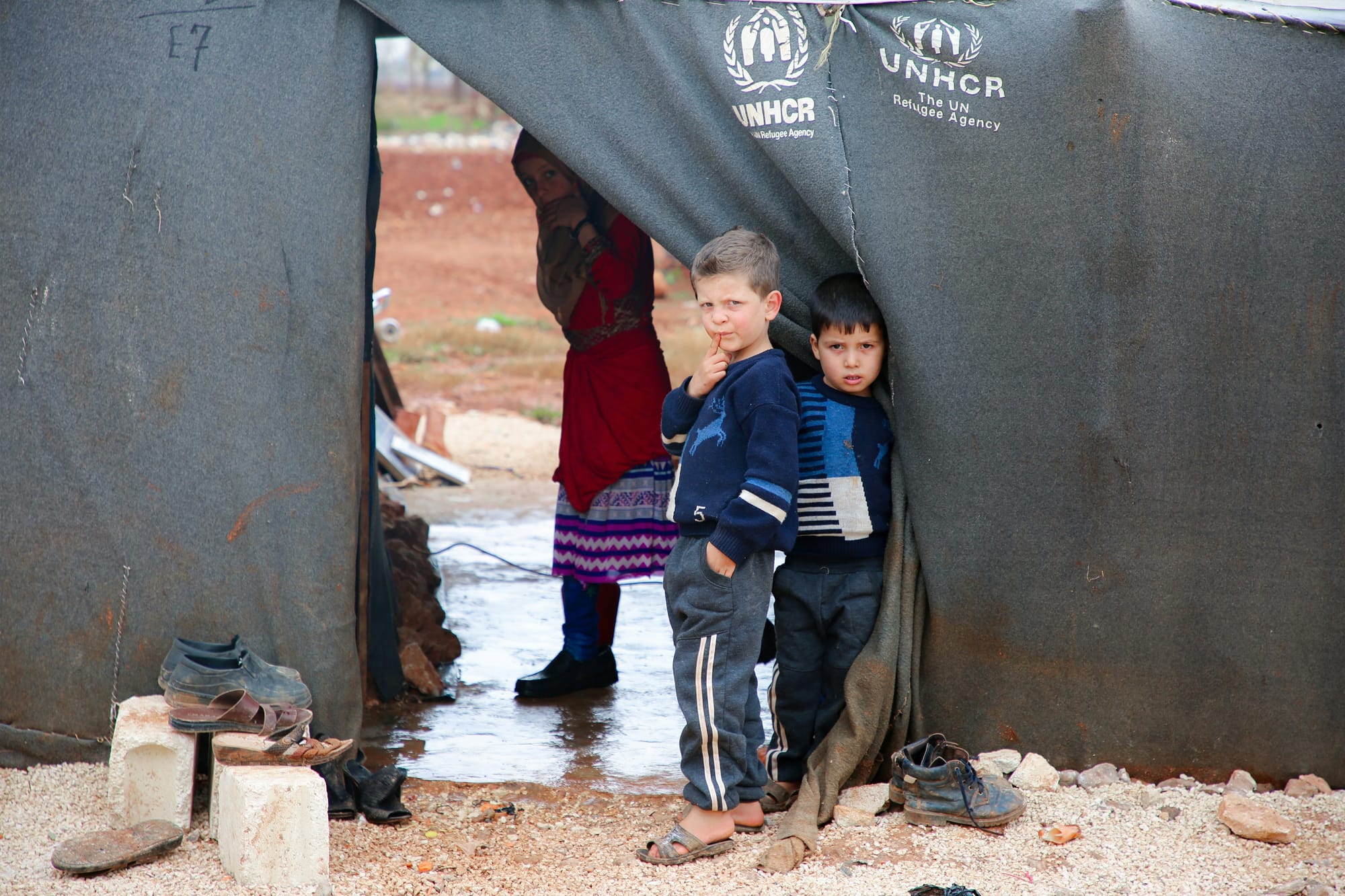

Two young children at the entrance of a UNHCR refugee tent in a camp, an adult behind them and shoes lined up on the wet ground
UK Home Office

Resettlement off the spreadsheet.
Helping the Home Office build digital tools for the caseworkers resettling Syrian refugees in the UK.

At a glance

Client
UK Home Office - Syrian refugee resettlement
My role
Design Lead on a Government Digital Service team in the Home Office
Users
Caseworkers, local authorities, charity groups
The work
Process mapping · user research · early prototypes for the resettlement programme
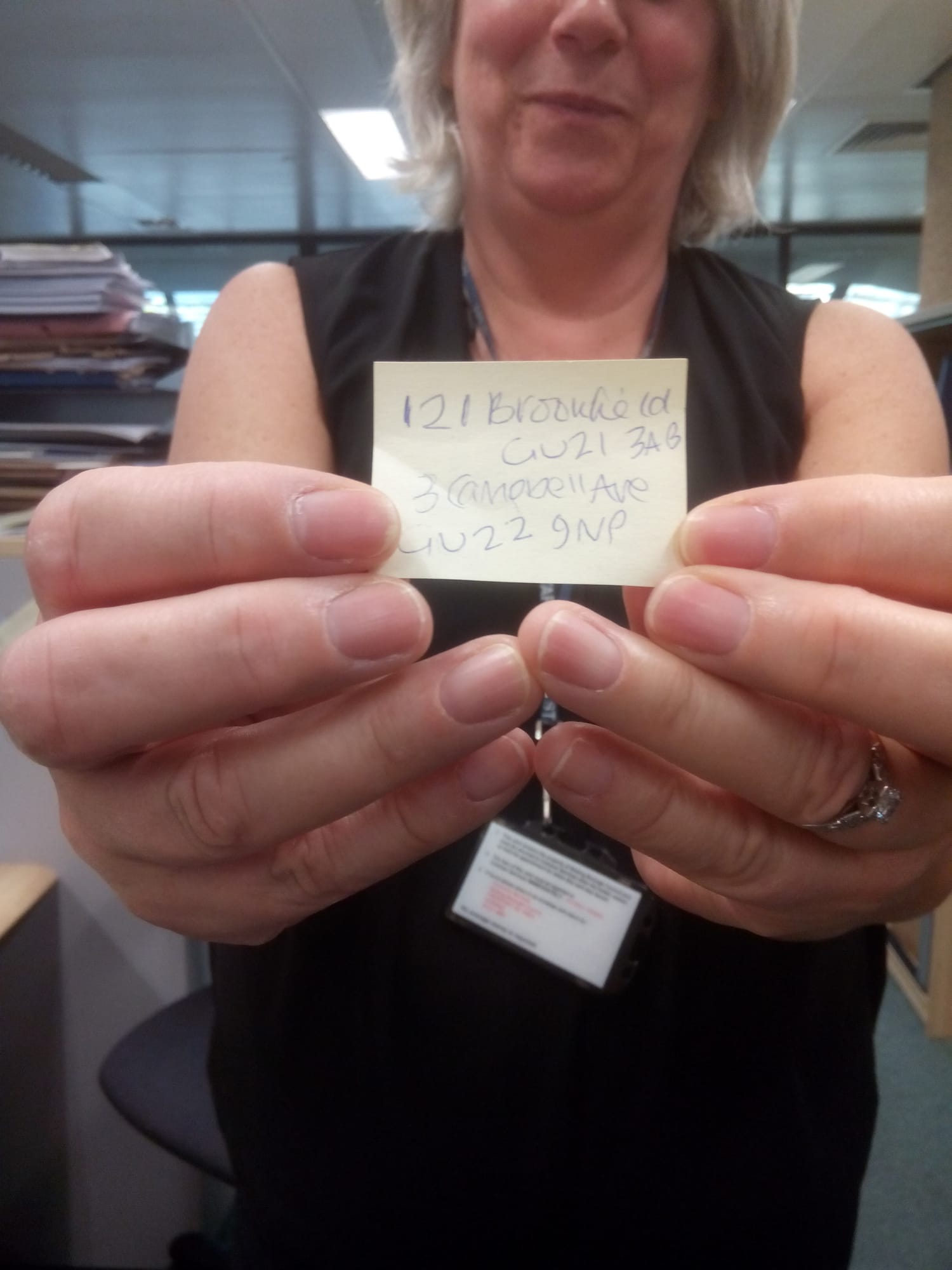
A caseworker holding a Post-it note with two handwritten housing addresses
A real artifact of the process: housing addresses, passed around on a Post-it.

The situation

A national effort, run on Excel and Post-its.

When the UK committed to resettling refugees from Syria, the volume overwhelmed the existing process almost immediately. Cases, housing pledges and funding were tracked in spreadsheets and handwritten notes.

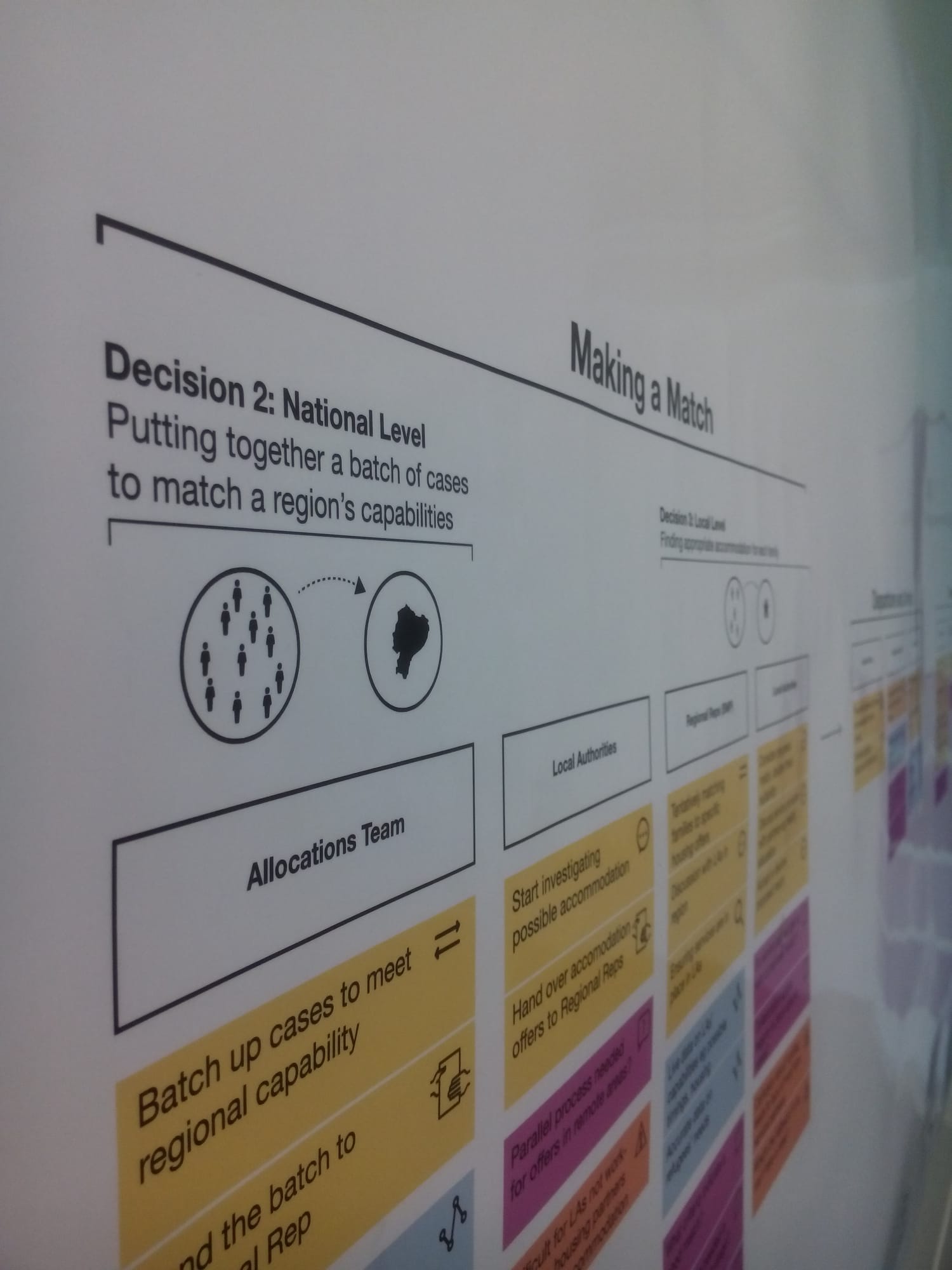
Detail of the wall map: 'Making a Match' - putting together a batch of cases to match a region's capabilities
The anticipated process for the regional match-making model, mapped wall-size.

Mapping the process

Every decision maker described a different process.

Mapping the journey made the gaps visible: the process on the ground versus the one everyone imagined. The blueprint had senior stakeholders asking, for the first time, is that really how this works, and why are we doing it that way?

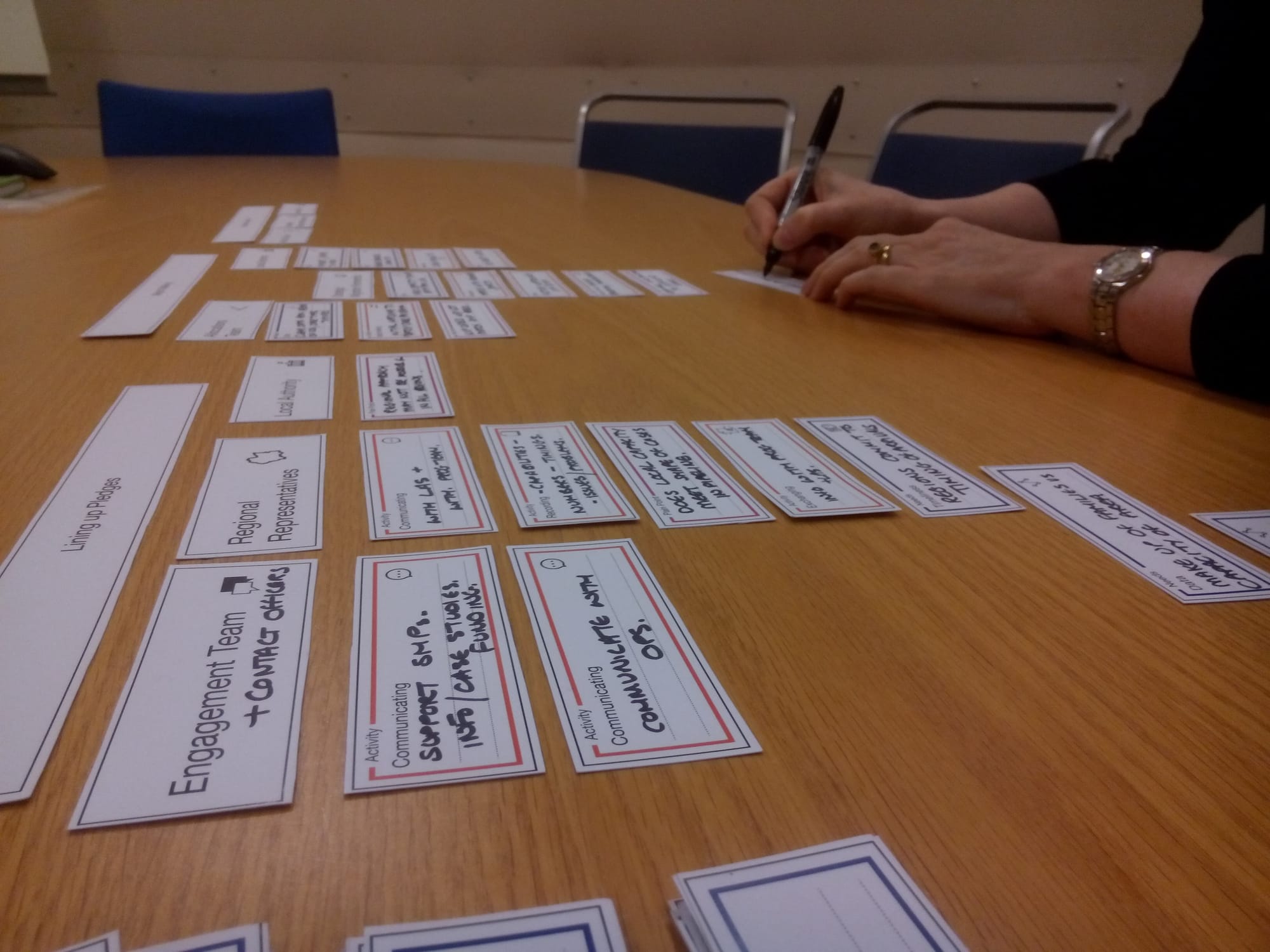
A workshop table covered in activity and pain-point cards, with a participant writing
Mapping activities and pain points with the people running the process.

The research

Built with the people doing the work.

Workshops, interviews and watching caseworkers, local authorities and charities at work. The people who line up pledges, match cases and receive families, to learn what they actually struggle with day to day.

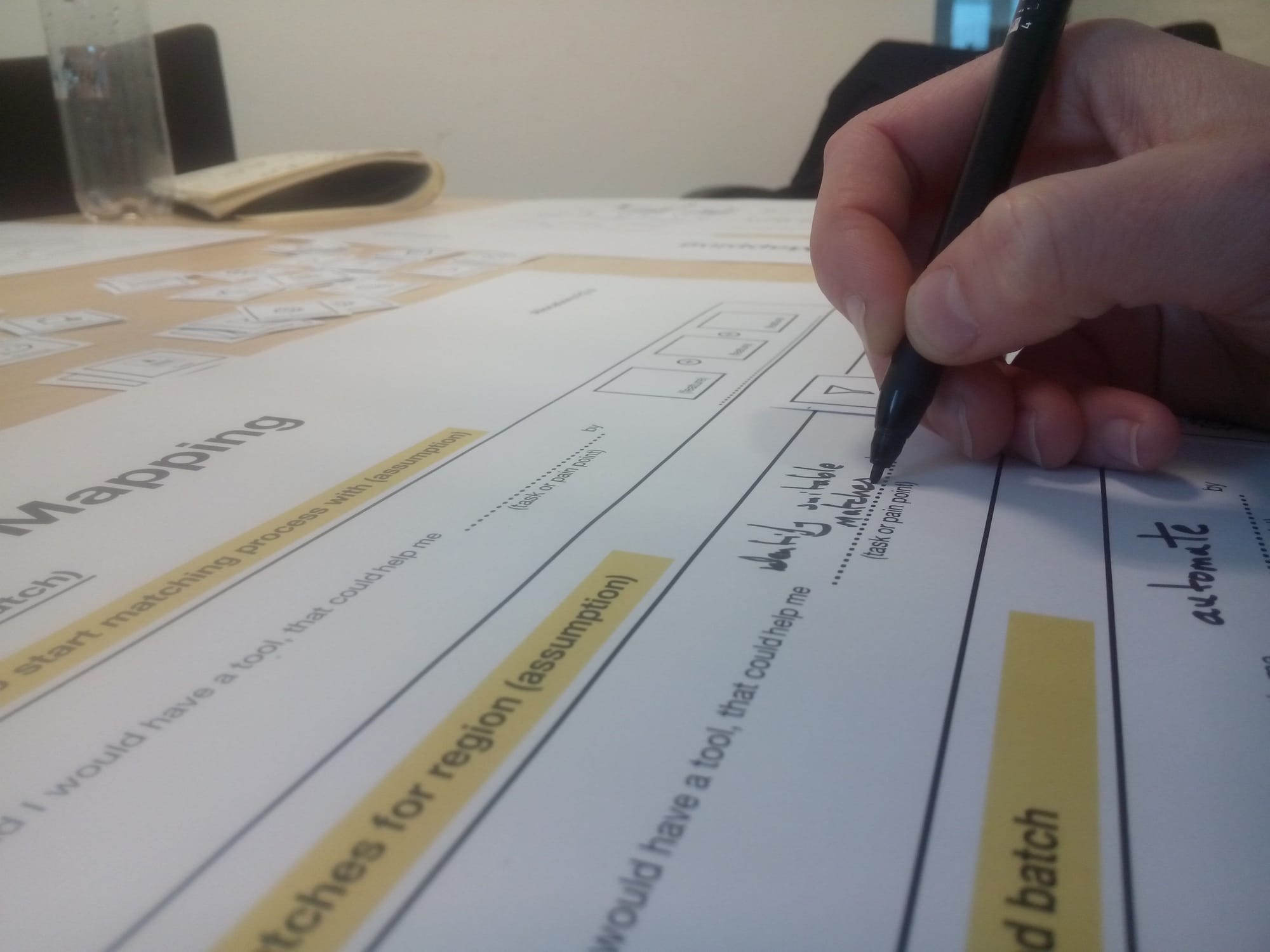
A mapping worksheet being filled in: 'I would have a tool that could help me…'
Opportunity worksheets: “…I would have a tool that could help me…”

From findings to opportunities

Pain points became a backlog of tools.

Each mapped pain point was turned into a concrete opportunity with the teams - what to automate, what to support, what to leave alone.

A GOV.UK alpha of the Syrian refugee resettlement service, open on a laptop during testing
The Syrian refugee resettlement service - in alpha, on GOV.UK rails.

Early prototypes

From paper worksheets to a working alpha.

The research fed straight into early digital prototypes for the resettlement service - built on GOV.UK patterns and tested with the caseworkers who'd use them.

Where it landed

Tools for the people helping people settle.

The mapping gave the programme a shared picture of its own process; the prototypes became the basis for digital tools the caseworkers actually used.

It shipped as a live service on GOV.UK, part of the Government Digital Service - used by caseworkers to resettle Syrian refugees, and to make that work faster and less error-prone.

Looking back

What stays with me

It is rare to design something this consequential - a live service for families arriving with almost nothing - and that stays with you. So does the lesson: never assume you know how a process really works. Map what people actually do, and pay closest attention to where they do something you didn't expect.

← Back to all work