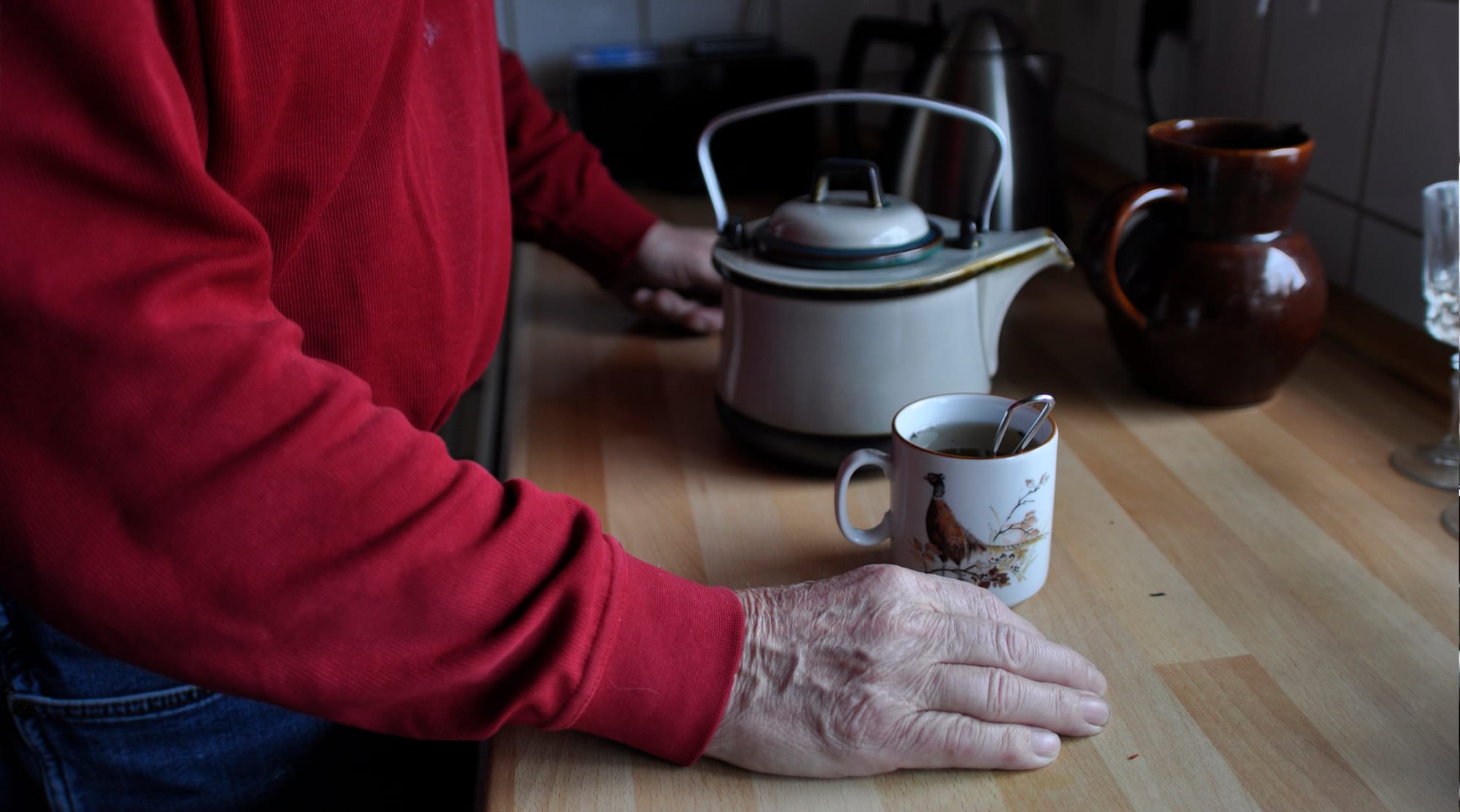
An elderly man's hand resting on a kitchen counter next to a cup of tea and a teapot

Care, seen from the kitchen table.

Researching the lives of elderly people and their carers - and mapping where Philips could help. With the UK Design Council.

At a glance

Client
Philips - in collaboration with the UK Design Council
My role
Design Lead - led a team of design researchers through user research & opportunity mapping
The people
Elderly people in care + their primary carers
Deliverable
A report + presentation: findings, pain points, themes, and opportunity areas

The brief

Where could Philips genuinely help?

Philips wanted to know what it could build for elderly people in care, and the family carers beside them. With the UK Design Council, we mapped their whole world of support: hospital visits, home equipment, and the strain of caring for someone you love.

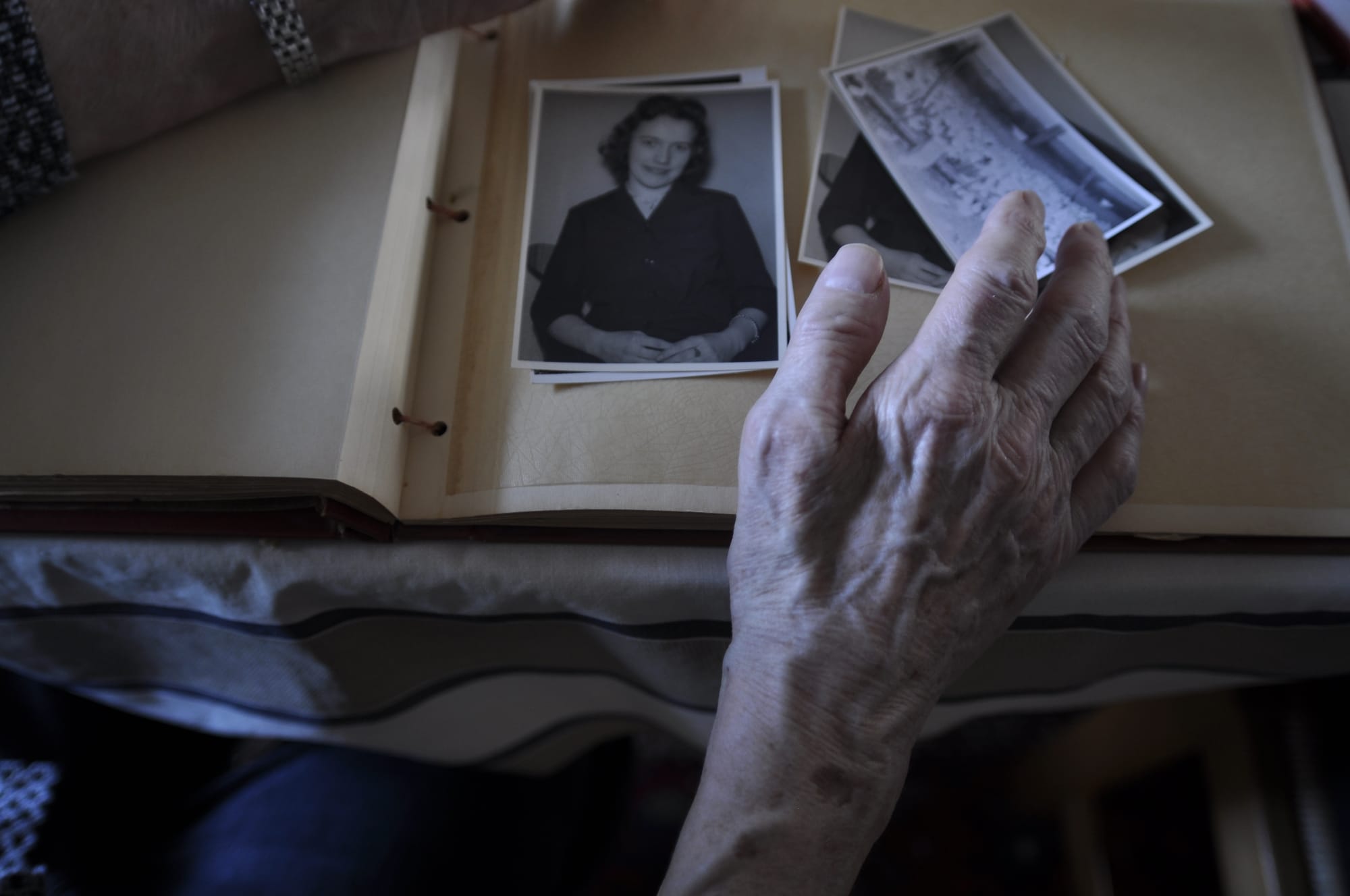
An elderly woman's hand resting on a photo album, over black-and-white photographs from her youth
In-home research: life stories, kept in photo albums.

The research

Work that needed real delicacy.

In-home interviews about health, dependence, and often cancer. Conversations this personal don't follow a discussion guide. They need time, empathy, and the tact to know when to stop asking.

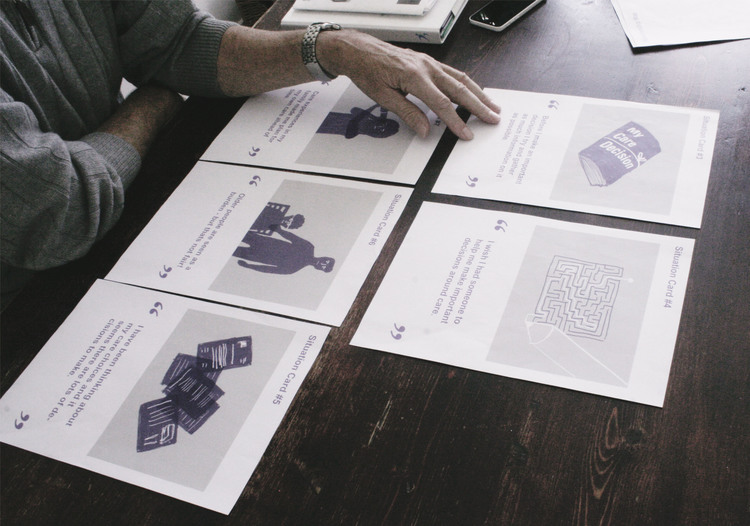
An elderly participant sorting illustrated situation cards on a dark wooden table
Situation cards, sorted at a participant's table.

The method

Cards that let people tell hard stories.

Situation cards gave participants something to point at when words were difficult - “I wish I had someone to help me make important decisions around care.”

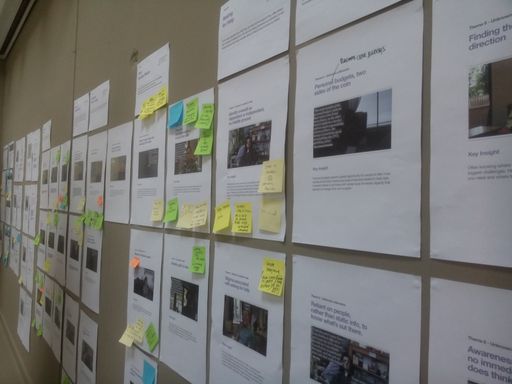
A synthesis wall of printed interview insights, annotated with sticky notes
The insight wall: themes and key insights from every interview.

The synthesis

Heavy stories, distilled into clear themes.

Every interview went up on the wall. Two things surfaced: how much one small break means to a carer giving up their own life, and how people rely on people, not static information, to find the help that exists.

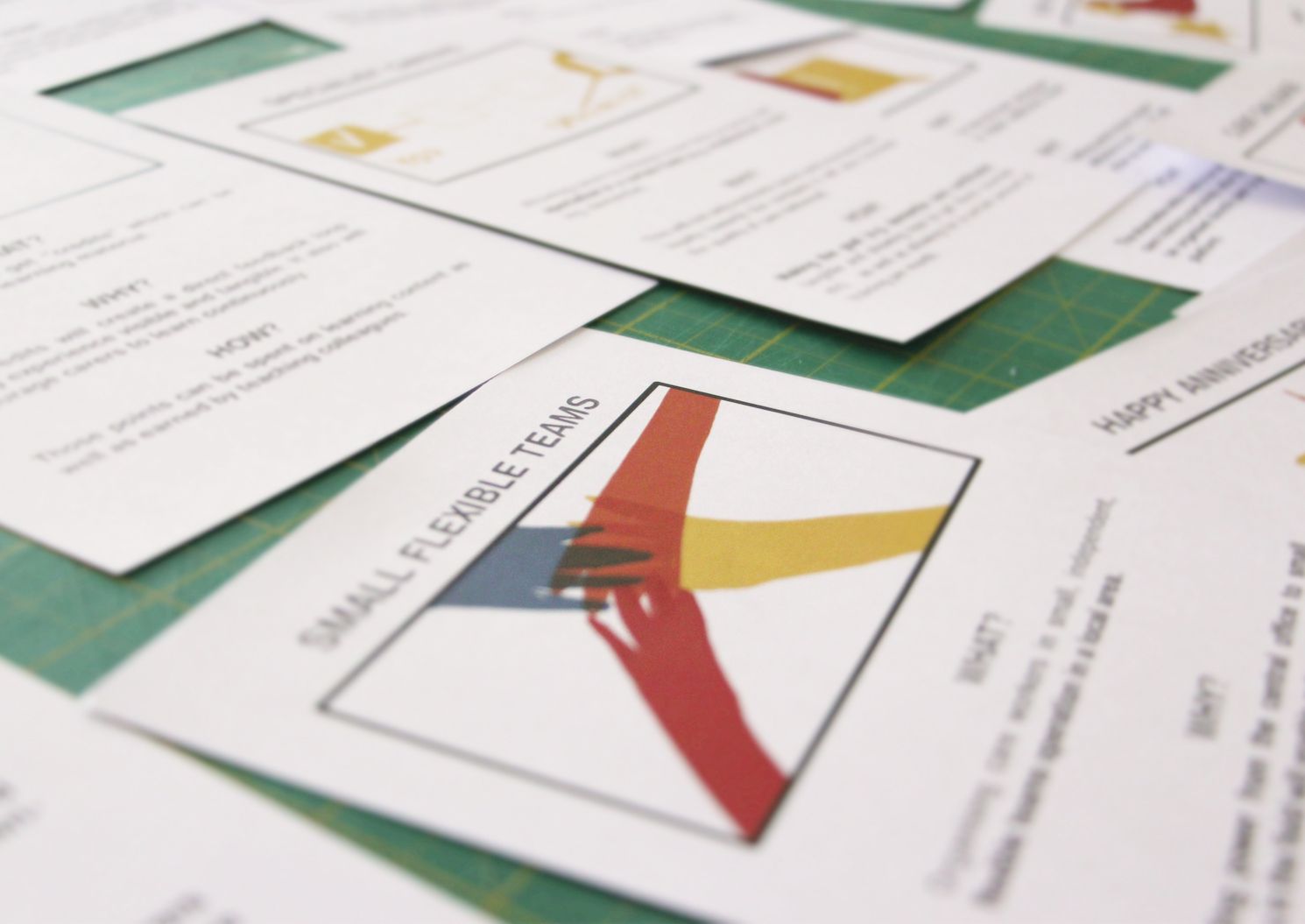
Illustrated opportunity cards spread on a cutting mat, each with a what, why and how
Opportunity cards: each area gets a what, a why and a how.

Opportunity areas

Opportunities Philips could act on.

The themes became broad opportunity areas. Each one a card the Philips team could pick up, debate and prioritise.

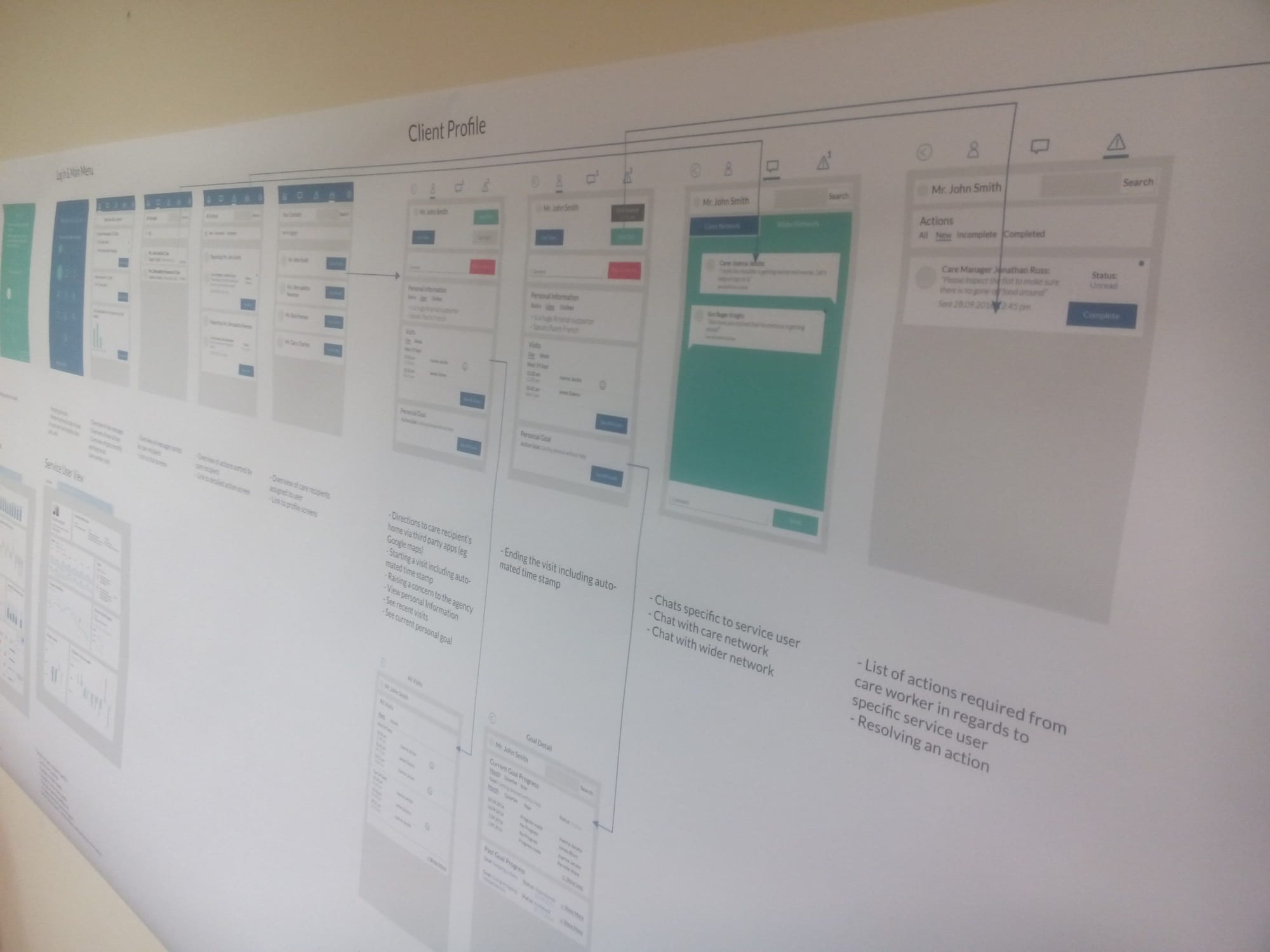
A wall of concept wireframes for a shared care network connecting a care recipient, family and care workers
Concept wireframes: one care network around one person.

Making it tangible

Concepts, taken far enough to feel real.

Selected opportunities were sketched into early concepts. One was a shared care network connecting the care recipient, their family and their care workers.

The deliverable

Findings, themes, opportunities.

We delivered a report and a final presentation: the research findings, the key pain points, the themes, and the opportunity areas where Philips could help.

That was the scope. What Philips built from it afterwards, I honestly can't say. The brief was to map the space, not to ship the product.

Looking back

What stays with me

The hardest and most rewarding part was the research itself: building enough trust that people would open up about things this private - illness, dependence, the lives carers quietly give up. You can't get that from a survey. It takes empathy, and real care in how you ask.

← Back to all work