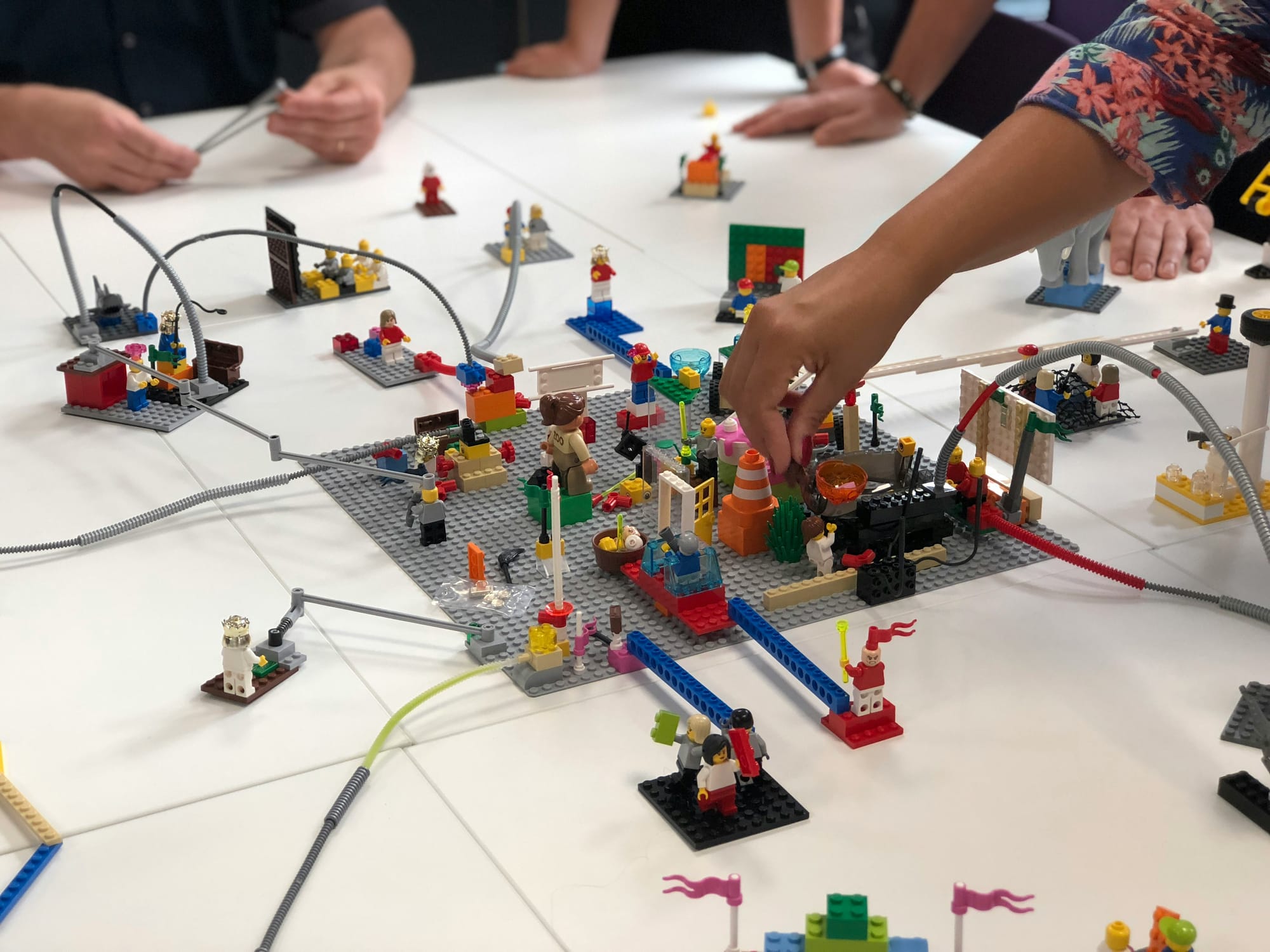
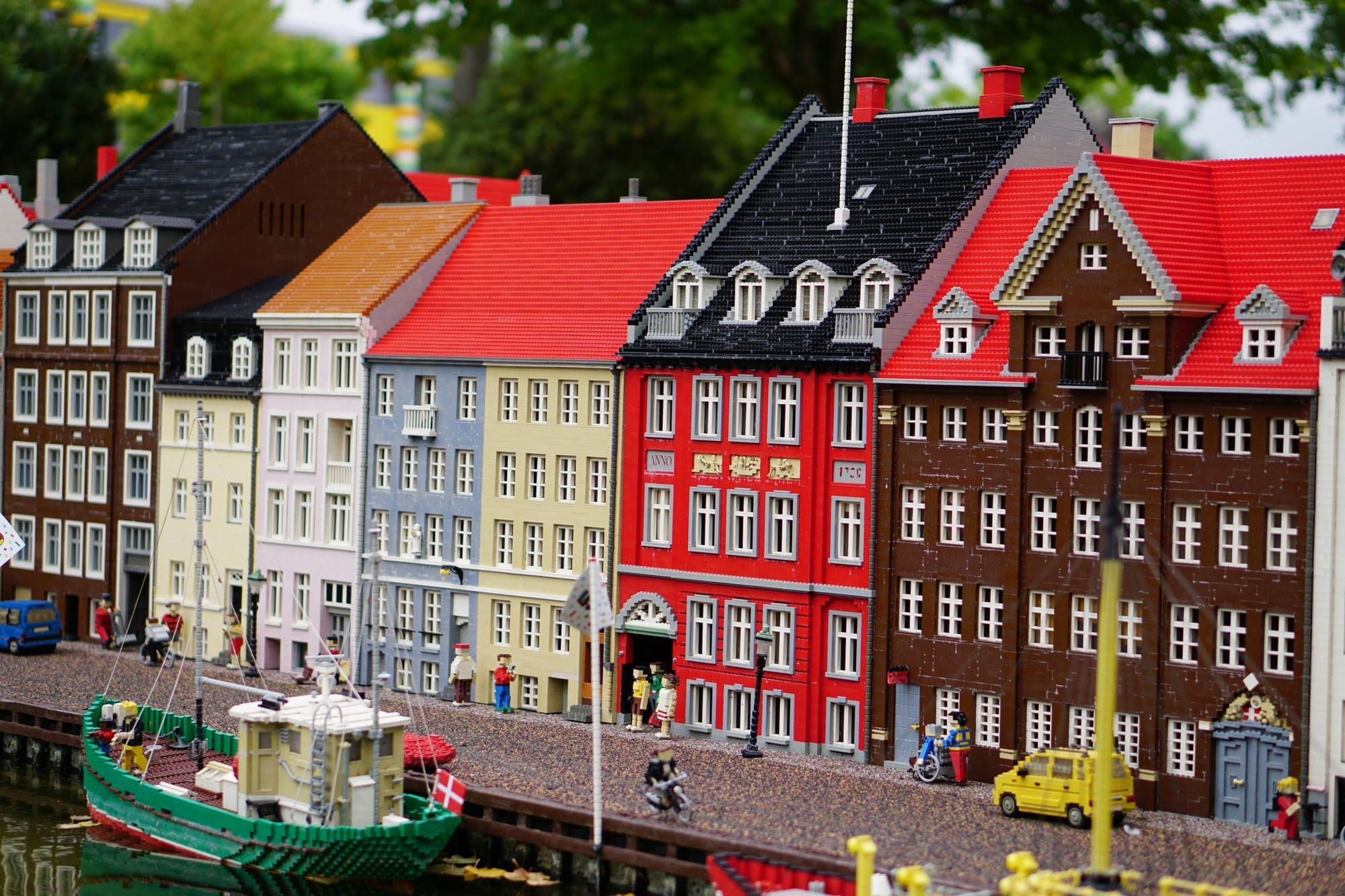
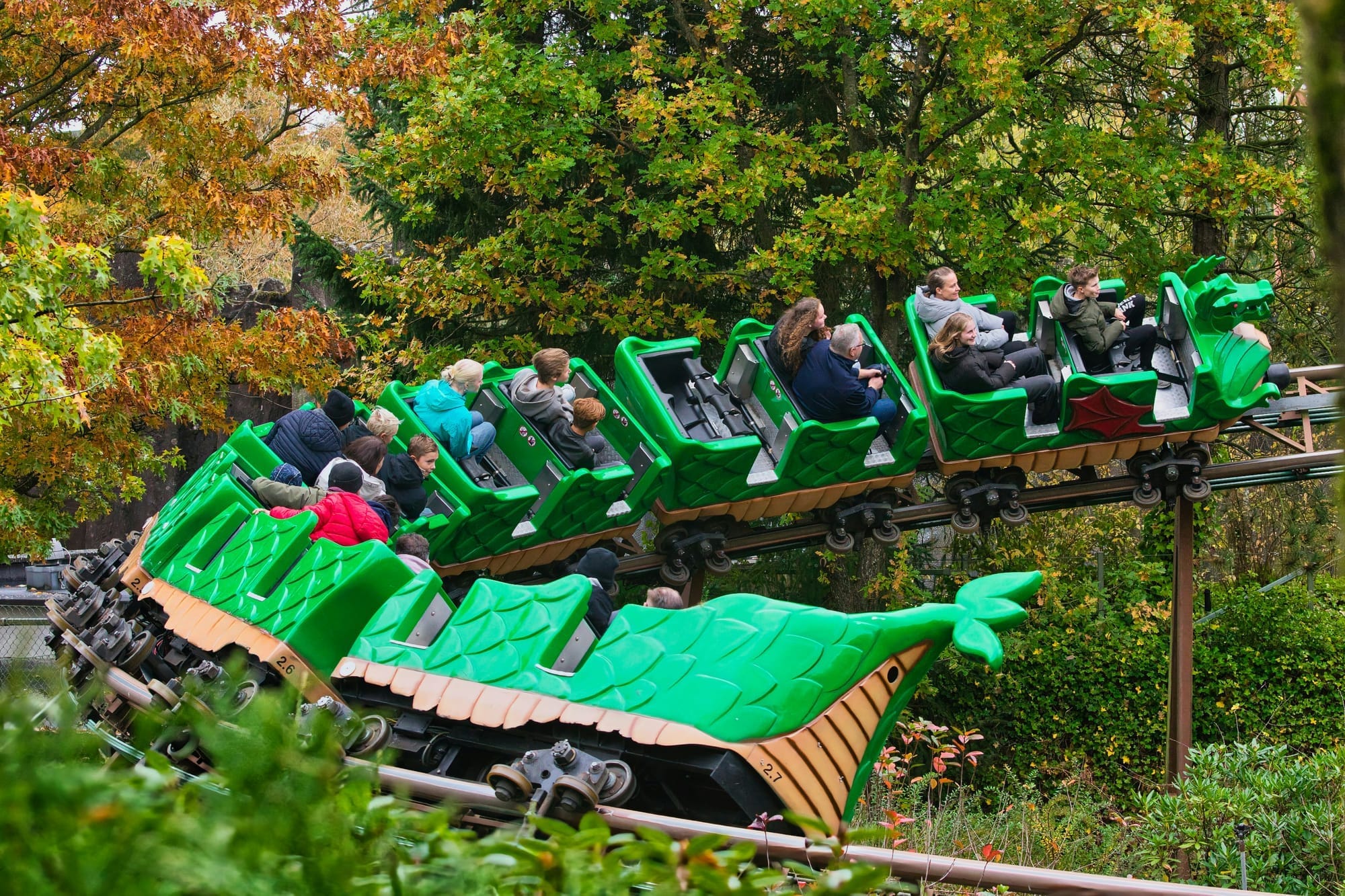
In-park research at LEGOLAND Billund - mapping the moments between the rides.
TLDR
LEGOLAND Billund is a LEGO theme park in Denmark, built for family days out.
As a service designer, I ran the in-park research and journey-mapping work.
A short project: dozens of hours in the park, watching and talking to families.
I delivered a research report with opportunity areas for the break experience.
The brief
Everyone designs the rides. Nobody designs the breaks.
LEGOLAND wanted to understand the parts of a visit that aren't attractions - where families need food, a place to sit, shelter from the rain or just a pause, and where the park could do better.
The reframe
A family's day is a rhythm, not a ride sequence.
Excitement needs recovery. When the recovery fails - hungry kids, nowhere to sit, a queue for lunch - the whole day sags, no matter how good the rides are.
The research
In the park, with families - not in a lab.
Dozens of hours in the park, interviewing families mid-visit and watching how they behaved: where they stopped, where they wanted to stop and couldn't, and when a break was chosen versus forced.
The mapping
The day, mapped as families actually live it.
Journeys mapped around the breaks rather than the rides - where the park supported a pause, and where it forced one.
What came out
Where the day sagged - and where it could be saved.
One thread ran through it: a family isn't one customer. Kids and grown-ups want different things from a break, and the sharpest opportunities were the moments where one of them - often the kids - had a need the park didn't meet.
I delivered the research report and the opportunity areas. What LEGOLAND did with them, I honestly can't say.
Looking back
What stays with me
The best parts of an experience are often the quiet ones nobody owns: the bench, the coffee, the pause between the big moments. And a family is never one user. Getting those in-between moments right means serving the four-year-old and the grandparent at once.

.jpg)